Advertisement

Huntingdon Native Helps Navy’s Submarine Force Stay Mission-Ready

Mass Communication Specialist Seaman Diamond Kyles, Navy Office of Community Outreach
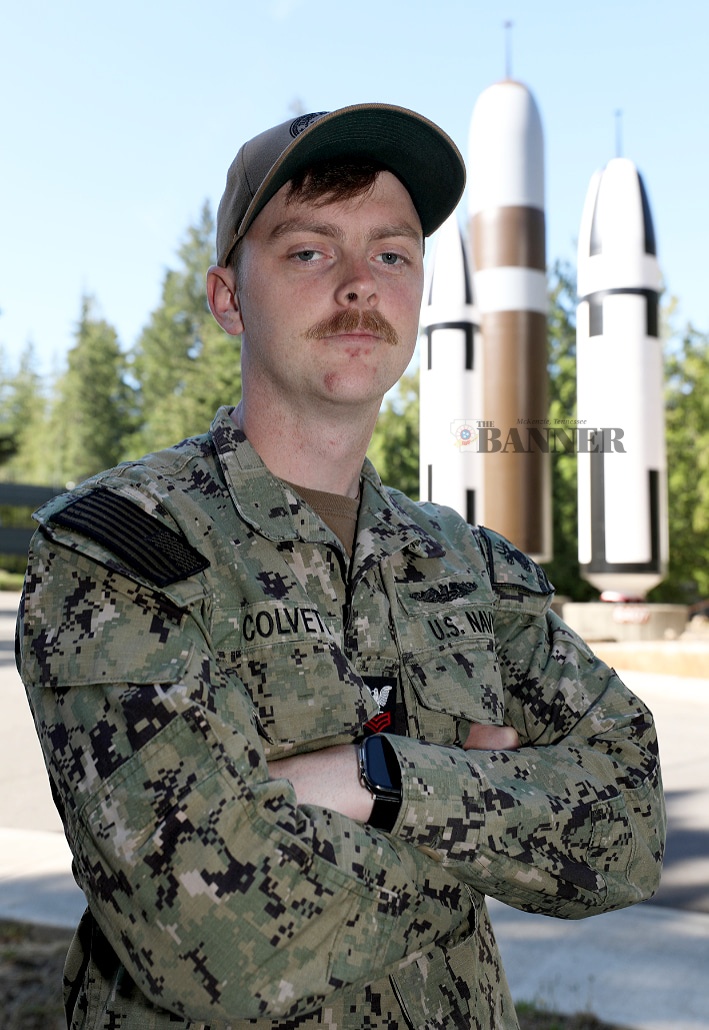
web2-Colvett_Benjamin
Photo by Lt. Cmdr. Michelle Tucker

SILVERDALE, Wash. — Petty Officer 1st Class Benjamin Colvett, a native of Huntingdon, Tenn., serves in the U.S. Navy assigned to Trident Refit Facility Bangor (TRFB) at Naval Base Kitsap-Bangor, Wash., the homeport of West Coast ballistic-missile and guided-missile submarines.


Colvett graduated from Huntingdon High School in 2019. He said the skills and values needed to succeed in the Navy are similar to those found in Huntingdon.


“The lessons I’ve learned that I have carried with me are the importance of hard work and always doing the best job I can,” Colvett said. “I grew up with a mechanic as a father, and he always put in hard work at his job. He passed his knowledge to me and gave me a lot of hands-on mechanical experience. This allowed me to excel in my job here in the Navy.”


Colvett joined the Navy six years ago and now serves as a machinist’s mate (non-nuclear, submarine auxiliary).


“I joined the Navy to get out and see what else was out there in the world,” Colvett said.


Submarine support commands, like Strategic Weapons Facility Pacific (SWFPAC) and TRFB, play a critical role in the nation’s strategic deterrence mission by ensuring the Navy’s Pacific Submarine Force is mission-ready to deter adversaries and defend the United States.


SWFPAC, established in 1964 to support the nation’s sea-based nuclear deterrence program, assembles and deploys Trident II D5 missiles aboard the fleet’s ballistic-missile submarines while safeguarding the nation’s strategic assets. Marine Corps Security Forces Battalion (MCSFBn) Bangor works with SWFPAC to provide security for strategic assets.


Established in 1981 as the primary maintenance facility for the Pacific ballistic-missile submarines, TRFB is responsible for repairing, incrementally overhauling and modernizing ballistic-missile submarines during refits for the Ohio-class and the future Columbia-class until the end of service life.


Known as America’s “Apex Predators,” the Navy’s submarine force operates a large fleet of technologically advanced vessels. These submarines are capable of conducting rapid defensive and offensive operations around the world to deter aggression and defend the U.S. homeland.


There are three basic types of submarines: fast-attack submarines, ballistic-missile submarines and guided-missile submarines.


The Navy’s ballistic-missile submarines, often referred to as “boomers,” serve as a strategic deterrent by providing an undetectable platform for submarine-launched ballistic missiles. Ballistic-missile submarines are designed specifically for stealth, extended patrols and the precise delivery of missiles. The Columbia-class ballistic-missile submarine will be the largest, most capable and most advanced submarine produced by the U.S. – replacing the current Ohio-class ballistic-missile submarines to ensure continuous sea-based strategic deterrence into the 2080s.


Strategic deterrence is the nation’s ultimate insurance program. As a member of the submarine force, Colvett is part of a rich 126-year history of the U.S. Navy’s most versatile weapons platform, capable of taking the fight to the enemy in the defense of America and its allies.


The Pacific Submarine Force provides strategic deterrence, anti-submarine warfare, anti-surface warfare, precision land strike, intelligence, surveillance, reconnaissance, early warning and special warfare capabilities around the globe.


With 90% of global commerce traveling by sea and access to the internet relying on the security of undersea fiber-optic cables, Navy officials continue to emphasize that the prosperity of the United States is directly linked to recruiting and retaining talented people from across the rich fabric of America.


Colvett has many opportunities to achieve accomplishments during military service.


“My proudest accomplishment is receiving the Navy and Marine Corps Achievement Medal,” Colvett said. “I got this award for passing the diesel inspection on my boat and for my assistance with helping out other boats. Being recognized for this really brings me pride.”


Colvett serves a Navy that operates far forward, around the world and around the clock, promoting the nation’s prosperity and security.


“Serving in the Navy means everything to me,” Colvett said. “Without the Navy, I wouldn’t be where I am today.”


Colvett is grateful to others for helping make a Navy career possible.


“I would like to thank my parents,” Colvett said. “Without their support, I would not have been able to keep the motivation to continue my naval career and become as successful as I am today.”


This year, the Navy is commemorating its contribution to the nation’s defense as the United States celebrates 250 years of independence.


Advertisement

Related Stories

© Copyright 2026 Tri-County Publishing, Inc. | Privacy | Terms
Powered by Novel.ad