Ten Historical Tidbits About The Christmas Traditions
From the Dec 23, 2024 e-Edition• Charles Dickens wrote A Christmas Carol in 1843 to raise awareness about the plight of the poor and to encourage charitable giving during the Christmas season. He was inspired by his own experiences with poverty and social injustice, and he wanted to use his writing to make a difference in the world. The novella was an immediate success, and it has since become one of the most beloved and enduring Christmas stories of all time.
• In 1843, Sir Henry Cole commissioned artist John Callcott Horsley to create the first commercially produced Christmas card. This card, featuring a family enjoying Christmas dinner with wine and gifts, was intended to be shared with friends and family. Its release marked the beginning of the popular tradition of exchanging Christmas cards.
• “Twas the Night Before Christmas,” also known as “A Visit from St. Nicholas,” was first published anonymously in 1823 in a Troy, New York newspaper. Clement Clarke Moore, a prominent scholar, later claimed authorship in 1837, though some scholars believe Henry Livingston Jr. may have written it earlier. The poem has become a beloved Christmas classic, popularizing many of the familiar images of Santa Claus, such as his eight reindeer, his sleigh, and his jolly demeanor.
• The tradition of hanging Christmas stockings stems from a heartwarming legend about St. Nicholas from the early 19th Century. It’s said that he secretly tossed bags of gold through the window of a poor man whose daughters couldn’t afford dowries. One of the bags landed in a stocking hung by the fireplace to dry. This act of kindness inspired the custom of children hanging stockings on Christmas Eve, hoping for a visit from St. Nicholas, who would fill them with small gifts.
• The candy cane’s origins are a bit unclear, but it’s believed to have started in 17th-century Germany. A choirmaster, wanting to keep children quiet during church services, may have commissioned candy sticks with a crook at the end to resemble shepherd’s crooks. These early candy canes were likely plain white. The red and white stripes and peppermint flavor were introduced later, potentially inspired by barber poles.
• The tradition of kissing under the mistletoe has roots in ancient cultures. The Druids considered mistletoe sacred, believing it had magical powers. Norse mythology tells of the goddess Frigg, whose son was killed by an arrow made of mistletoe. Overcome with grief, she blessed the plant, promising a kiss to anyone who passed beneath it. Over time, this evolved into a Christmas custom, symbolizing peace, love, and good fortune.
• Eggnog has its roots in the medieval British drink called “posset,” a warm mixture of milk curdled with wine or ale and spiced with flavors like cinnamon and nutmeg. By the 13th century, some monks even began adding eggs and figs to their possets. When this drink made its way to the American colonies in the 1700s, it evolved into eggnog, often incorporating rum or other spirits.
• The Christmas tree tradition originated in Germany during the 16th century. German Lutherans are credited with popularizing the custom of bringing decorated trees into their homes. Legend has it that Martin Luther, inspired by the twinkling stars among the evergreen branches, added candles to his Christmas tree. This practice, along with the use of decorations like apples, nuts, and later, ornaments, helped spread the Christmas tree tradition throughout Europe and eventually to North America.
• The tradition of making gingerbread houses is believed to have originated in Germany in the early 1800s, inspired by the Grimm’s fairy tale “Hansel and Gretel.” German bakers began creating edible houses made of lebkuchen (gingerbread) to resemble the story. These gingerbread houses became popular during Christmas, and the tradition eventually spread to other parts of Europe and North America. Today, decorating gingerbread houses is a beloved Christmas activity for families, often involving creative designs and colorful candies.
• The tradition of leaving milk and cookies for Santa Claus likely originated in the 1930s during the Great Depression. As families struggled financially, parents encouraged their children to leave out treats for Santa as a gesture of gratitude and appreciation for the gifts they received. This heartwarming practice has since become a beloved Christmas tradition, symbolizing the spirit of generosity and the magic of the holiday season.
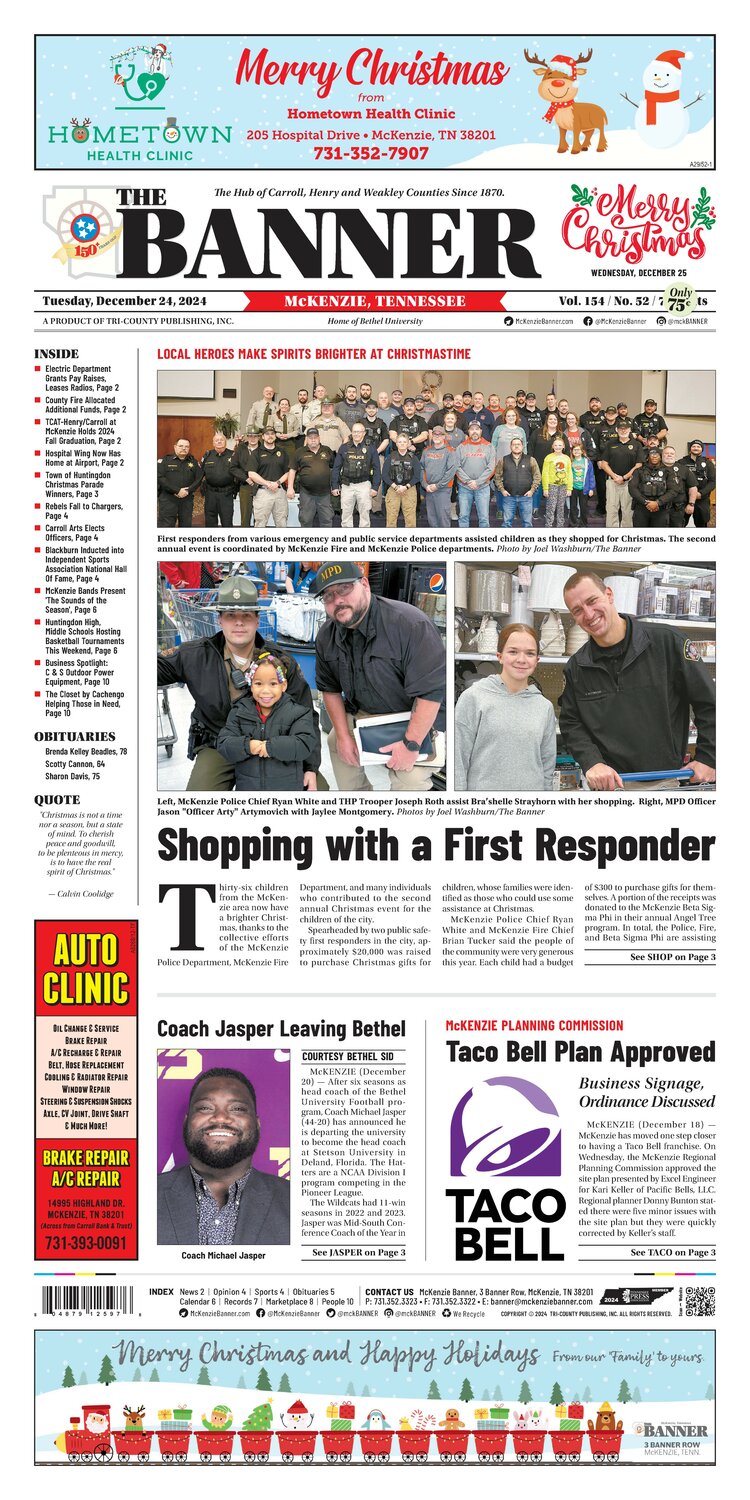
In the e-Edition
McKenzie Banner December 24, 2024
Dec 23, 2024 · Read the full issue →
Related Stories

Glow Walk to Bring Awareness, Prevention of Suicide
McKENZIE, Tenn — The Carroll County Health Council, in partnership with Bethel University, will host a Suicide Prevention Glow Walk on Tuesday, Sept. 22, at 7 p.m. to raise awareness and bring community members together in support of suicide prevention.
Sep 13, 2026

Cash Express Honors McKenzie’s First Responders
McKENZIE (September 11) — On Friday, Cash Express honored McKenzie Police (MPD), McKenzie Fire & Rescue (MFD), and Baptist-Carroll County Ambulance first responders with cakes decorated with the American flag and cards signed by McKenzie businesses thanking them for their…
Sep 11, 2026

Wallace and Company Delights Crowd at Park Theatre
McKENZIE (September 3) — The Nights on Broadway concert series relocated inside the historic Park Theatre to beat the heat on Thursday. Wallace and Company delighted the crowd with a mix of classic rock and country music on the McKenzie Banking Company stage. Audience members…
Sep 8, 2026
Paris Landing Arts and Crafts Festival is September 12-13
The 26th annual Paris Lakeway Kiwanis Club Arts and Crafts Festival at Paris Landing State Park features over 115 local and regional crafters displaying and selling their handmade and hand-crafted items. The setting at Paris Landing State Park provides visitors with great views while shopping. There will also be food and beverage vendors, as well as a petting zoo. Admission and parking are free.
Sep 8, 2026