Tennessee Has A Maternal Health Care Crisis
From the Feb 24, 2026 e-Edition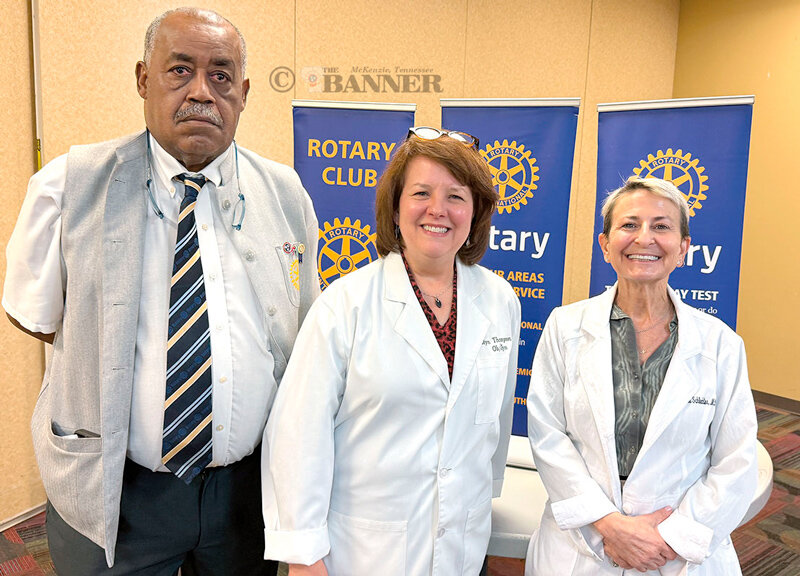
The speakers, Dr. Nicole Schlecter, MD, PhD FACOG, and Dr. Carolyn Thompson, MD, FACOG, were the featured speakers for the Tuesday, February 17, meeting of the McKenzie Rotary Club. Both work as physicians in obstetrics and described the crisis in obstetric healthcare and the shortage of practitioners in Tennessee.
The local area is considered a 'desert' for obstetric services due to the decline in birthing centers. Many rural areas lack birthing centers or hospitals. There are no birthing centers in Carroll or Henry counties. The nearest centers are in Martin, Union City, and Jackson.
Dr. Thompson, a Collierville native with deep family roots in West Tennessee, delivered a presentation on Tennessee's severe maternal and infant mortality crisis. One of her ancestors attended Bethel College. She noted the state has the highest maternal mortality rate in the country at 42 deaths per 100,000 live births, which is comparable to developing nations like Kyrgyzstan, Mongolia, and Honduras (47 per 100,000), and significantly worse than its peers. The speaker highlights that over 90% of these deaths are preventable. The leading causes include mental health conditions and substance use disorders, cardiovascular issues, preeclampsia, infections, hemorrhage, and embolism.
A significant portion of the presentation focused on systemic barriers to care. These include a lack of adequate prenatal care for nearly 20% of women, and maternity care "deserts" in 35 of Tennessee's 95 counties, which lack hospitals with obstetric services. This forces over a quarter of women to travel more than 30 minutes for care. The financial unsustainability of obstetrics is leading to the closure of rural hospital labor and delivery units, with 10 rural hospitals at critical risk of closure. Tennessee also ranks near the bottom for access to mental healthcare, the leading driver of maternal deaths.
The discussion also addresses the impact of Tennessee's restrictive abortion law, the Human Life Protection Act, which went into effect in August 2022. The doctors do not participate or advocate for elective abortion. Only in the case of necessity to save lives are any such procedures considered for their medical practice.
The Tennessee law creates a near-total ban on abortions, with no exceptions for rape, incest, lethal fetal anomalies, or a mother's mental health, despite suicide being a significant cause of maternal mortality. While an exception for ectopic pregnancies has been added, the law creates a climate in which physicians must make some difficult decisions to save the life of the mother and/or baby. This leads to delayed treatment for emergencies, difficulty obtaining necessary medications like methotrexate and misoprostol, and challenges in treating pregnant patients with cancer. These restrictions are contributing to a decline in OB/GYN providers, who are retiring or leaving the state, and making it difficult to recruit new medical professionals.
Infant mortality is also a major concern, with Tennessee ranking 38th in the nation at a rate of 6.5 deaths per 1,000 births. The leading causes are birth defects, preterm birth, low birth weight, and Sudden Unexplained Infant Death (SIDS).
To address these crises, state-level initiatives include mandating that hospitals provide discharge information on warning signs (House Bill 572), expanding infectious disease screening (Senate Bill 1283), and considering TennCare coverage for doula services. The speakers advocate for further solutions, including expanding Medicaid, creating exceptions in the abortion law for medical necessity, implementing paid family leave, and improving overall access to care, particularly for mental health and chronic diseases. The growing role of midwives, both certified and lay, is also noted as a way to expand care, though physician supervision is recommended for potential complications. The speakers urge the audience to engage with legislators and support healthcare initiatives to prevent further tragic and avoidable deaths of mothers and infants.
In the e-Edition
McKenzie Banner February 24, 2026
Feb 24, 2026 · Read the full issue →
Related Stories

Glow Walk to Bring Awareness, Prevention of Suicide
McKENZIE, Tenn — The Carroll County Health Council, in partnership with Bethel University, will host a Suicide Prevention Glow Walk on Tuesday, Sept. 22, at 7 p.m. to raise awareness and bring community members together in support of suicide prevention.
Sep 13, 2026

Cash Express Honors McKenzie’s First Responders
McKENZIE (September 11) — On Friday, Cash Express honored McKenzie Police (MPD), McKenzie Fire & Rescue (MFD), and Baptist-Carroll County Ambulance first responders with cakes decorated with the American flag and cards signed by McKenzie businesses thanking them for their…
Sep 11, 2026

Wallace and Company Delights Crowd at Park Theatre
McKENZIE (September 3) — The Nights on Broadway concert series relocated inside the historic Park Theatre to beat the heat on Thursday. Wallace and Company delighted the crowd with a mix of classic rock and country music on the McKenzie Banking Company stage. Audience members…
Sep 8, 2026
Paris Landing Arts and Crafts Festival is September 12-13
The 26th annual Paris Lakeway Kiwanis Club Arts and Crafts Festival at Paris Landing State Park features over 115 local and regional crafters displaying and selling their handmade and hand-crafted items. The setting at Paris Landing State Park provides visitors with great views while shopping. There will also be food and beverage vendors, as well as a petting zoo. Admission and parking are free.
Sep 8, 2026