Ford Rebrands Tennessee Facility, Swaps Electric Pickup For Next-Gen Gas Truck
From the Dec 23, 2025 e-EditionSTANTON, Tenn. (December 16) — In a major recalibration of its electrification strategy, Ford Motor Company announced this week that it is abandoning plans to build an all-electric pickup truck at its massive West Tennessee campus. Instead, the facility will be repurposed to produce a next-generation gasoline-powered pickup truck.
The site has been officially rebranded as the Tennessee Truck Plant. The shift reflects a “customer-driven” pivot as the automaker grapples with cooling EV demand, high production costs, and a rapidly changing regulatory landscape.
The announcement, delivered by Ford’s Chief Government Affairs Officer to area West Tennessee government officials and economic developers, marks a significant departure from the original 2021 vision for BlueOval City. While the physical buildings on the 3,300-acre site are complete, the plant’s interiors will now undergo an extensive retooling.
Crews will transition assembly lines, stamping, frames, and paint shops originally designed for the “Project T3” electric truck to accommodate internal combustion engines. The new gasoline-powered model—a completely new nameplate—is targeted for a 2029 launch.
“The operating reality has changed,” said Ford CEO Jim Farley in a statement. “This is a customer-driven shift to create a stronger, more resilient, and more profitable Ford.”
Jobs and Economic Impact
Despite the production change and the launch delay, Ford underscored its commitment to West Tennessee, noting that:
• Hiring Goals: The first shift is still expected to create approximately 2,300 new jobs.
• Timeline: Hiring will be phased in leading up to the 2029 launch to allow for specialized training.
• Supplier Opportunities: While the gas-powered truck requires different components, Ford anticipates the shift will create new opportunities for local suppliers.
Area industrial leaders, including McKenzie and Huntington, have been preparing for several years to attract suppliers to Ford’s and SK’s manufacturing facilities. Ford’s announcement of its commitment to West Tennessee is a positive step toward economic and community development in the western portion of the state.
The Future of the
Battery Plant
The on-site battery plant, a cornerstone of the original joint venture between Ford and South Korean partner SK On, is also undergoing a structural change. The two companies are dissolving their “BlueOval SK” joint venture.
Under the new agreement, SK On will take sole ownership and operational control of the adjacent Tennessee battery plant. While SK will continue to supply Ford, the move allows the battery manufacturer to seek other customers, including data centers for energy storage systems. Hiring for the battery facility remains on track.
Broader EV Strategy
Ford isn’t abandoning electric power entirely. The company revealed it is shifting its focus toward Extended-Range Electric Vehicles (E-REVs)—trucks that use an electric powertrain paired with a small gas generator to eliminate range anxiety during towing.
Additionally, Ford is developing a low-cost electric vehicle platform, with a $30,000 EV planned for production in Kentucky, as it aims to achieve 50% electrified sales by 2030.
In a separate press release, Ford said it is expanding customer choice with gas, hybrids and low-cost electric vehicle platforms.
By 2030, Ford expects approximately 50% of its global volume will be hybrids, extended-range EVs and fully electric vehicles, up from 17% in 2025.
Ford will concentrate its North American electric vehicle development on its new, low-cost, flexible Universal EV Platform. This next-generation architecture is engineered to underpin a high-volume family of smaller, highly efficient and affordable electric vehicles designed to be accessible to millions of customers.
The first vehicle from the Universal EV Platform will be the fully connected midsize pickup truck assembled at Louisville Assembly Plant starting in 2027.
Ford plans to expand hybrids with a range of executions based on customer needs and duty cycle – economical, performance hybrids and hybrids with exportable power. Ford is enhancing its strategy for larger trucks and SUVs to better align with customer demand for capability, towing and range, which includes adding extended-range electric options to its lineup.
As part of this plan, Ford’s next-generation F-150 Lightning will shift to an extended-range electric vehicle (EREV) architecture and be assembled at the Rouge Electric Vehicle Center in Dearborn, Michigan. Production of the current-generation F-150 Lightning has concluded, as Ford redeployed employees to the Dearborn Truck Plant to support a third crew for F-150 gas and hybrid truck production due to the Novelis fires.
“The F-150 Lightning is a groundbreaking product that demonstrated an electric pickup can still be a great F-Series,” said Doug Field, Ford’s chief EV, digital and design officer. “Our next-generation Lightning EREV is every bit as revolutionary. It keeps everything customers love – 100% electric power delivery, sub-5-second acceleration – and adds an estimated 700+ mile range and tows like a locomotive. It will be an incredibly versatile tool delivered in a capital-efficient way.”
In the e-Edition
McKenzie Banner December 23, 2025
Dec 23, 2025 · Read the full issue →
Related Stories
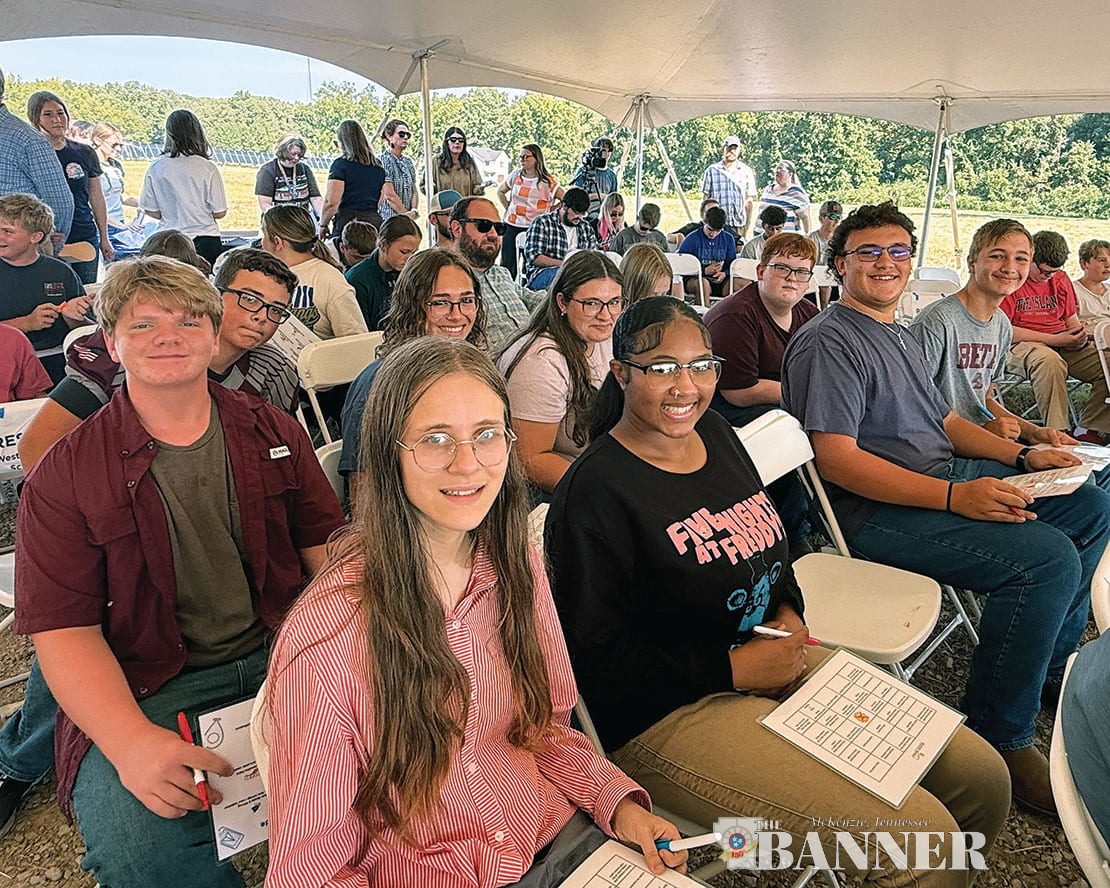
West Carroll Students Attend "Flip the Switch" at Solar Farm
West Carroll students had the opportunity to be part of an exciting moment for our local community this week as they attended the Trezevant Solar Farm “Flip the Switch” event!
Sep 13, 2026

Cash Express Honors McKenzie’s First Responders
McKENZIE (September 11) — On Friday, Cash Express honored McKenzie Police (MPD), McKenzie Fire & Rescue (MFD), and Baptist-Carroll County Ambulance first responders with cakes decorated with the American flag and cards signed by McKenzie businesses thanking them for their…
Sep 11, 2026
Trezevant Solar Farm Flip-the-Switch Event Happening Now
Carroll County Electric Department (CCED) and Tennessee-based Silicon Ranch , owner and operator of one of the nation’s largest fleets of solar facilities and a community-focused energy infrastructure company, invite you to attend a “Flip-the-Switch” ceremony for the new…
Sep 10, 2026
McKenzie Council to Consider Planning Commission Appointments
McKENZIE — The McKenzie City Council will meet Thursday, September 10, at 6 p.m. with a Tennessee Volunteer Firefighter Equipment and Training Grant and two appointments to the McKenzie Planning Commission among the items on the agenda.
Sep 8, 2026