Michael Tate
A Lifetime of Service to Community and Country
From the Feb 24, 2026 e-Edition
Michael Tate has dedicated much of his life to service — service to his country, to his workplace and to his community. Asked how he hopes to be remembered, his answer is simple: for his fairness.
That principle has followed Tate from his early adult years into retirement, influencing the way he works, leads and serves.
After graduating from an integrated Trezevant High School in 1969, Tate attended vocational school and worked briefly before being drafted into the U.S. Army during the Vietnam era. He served two years in communications, supporting troops overseas while stationed in the United States.
His assignments included White Sands Missile Range in New Mexico, Fort Campbell in Kentucky and West Point in New York, where he helped train cadets in field communications.
Within three weeks of leaving the Army, he was hired for a job with DuPont, where his father worked. That opportunity turned into a 42-year career.
At DuPont, Tate started in production and steadily moved up to supervisor and, later, area manager. He ran a $4 million experimental pilot plant and helped develop products containing titanium dioxide — a white pigment used in paint, cosmetics and building materials found in everyday life.
“I did good service for the company,” he said.
His leadership style centered on recognizing people as individuals.
“I’m not a believer of treating everybody the same,” Tate said. “Everybody’s different. You have to learn whoever you deal with and treat them accordingly … and try to treat them like you would be treated.”
While he built a long and stable career, Tate also witnessed moments that revealed lingering racial tensions. He recalls an incident early on when someone kicked him in what was described as a prank. The individual later apologized. He also remembers nooses appearing in certain areas of the plant, though no one ever claimed responsibility.
“Discrimination is so … disguised now,” he said. “But it’s there.”
Rather than withdraw, Tate leaned further into service.
After retiring in 2014, he became increasingly active in civic life. He serves on the Carroll County Election Commission, helping monitor and administer elections. The role involves reviewing voter registration information, ensuring procedures are followed correctly and preparing for busy election cycles.
He also serves as a board member for West Tennessee Legal Services and is an active member of the NAACP. His appointment to West Tennessee Legal Services came after the passing of an NAACP representative from Carroll County. Tate believes his corporate experience and active involvement in the NAACP played a role in his selection.
With the NAACP, he works on issues that arise locally — cases involving discrimination, housing concerns or situations where individuals believe they have been treated unfairly.
“We mainly work on problems when they arise,” he said. “When we think somebody has been wronged … we try to represent them, look out for their best interest.”
Tate said he grew up around the NAACP. Family members and acquaintances were involved, and he understood what the organization stood for. Joining after retirement felt like a natural extension of values he had long carried.
“That’s the whole purpose of a quality life,” he said. “Serving your fellow man.”
His commitment to service has also included time on the Huntingdon Planning Commission, where he participated in discussions about the city’s future growth and development. He twice ran for county commissioner, saying he believed he could help the county. Though he was not elected, he remains engaged in local issues.
Tate also plays a key role in preserving Black history in Carroll County through his work with the Webb School Alumni Association, where he serves as first vice president. Though he did not attend Webb himself, his siblings did. In his role, he manages bylaws and policies and works to ensure the organization stays on course.
“Some organizations, if they deviate from their bylaws and policies, they can become nonexistent,” he said.
For Tate, preserving history is tied to protecting community identity. Many former Black school buildings in the county — including the McLemoresville, Trezevant and Atwood (MTA) School he attended for several years — have been destroyed or repurposed, and records have been lost.
“Preserving Black history, especially now, is more important than it ever was,” he said.
Throughout his life, Tate has seen change. He attended segregated schools before graduating from an integrated high school. He served in the military during a turbulent period in American history. He built a decades-long career in industry and later stepped into public service roles.
He acknowledges progress over the past 50 years but also sees continuing inequities in employment opportunities and representation.
“It’s gotten better,” he said. “But it’s still a lot of things that … it’s a lot of glass ceilings.”
Tate and his wife, Monica Adams Tate, have lived in Huntingdon for decades. Tate has three children: Treven Markee Tate and the late Erica Tate Harris and Terence Tate. He is the grandfather of six and great-grandfather of three.
When reflecting on his life, Tate does not point first to military assignments, management titles or board memberships. He returns to character, to fairness and to service.
More Photos & Video
In the e-Edition
McKenzie Banner February 24, 2026
Feb 24, 2026 · Read the full issue →
Related Stories
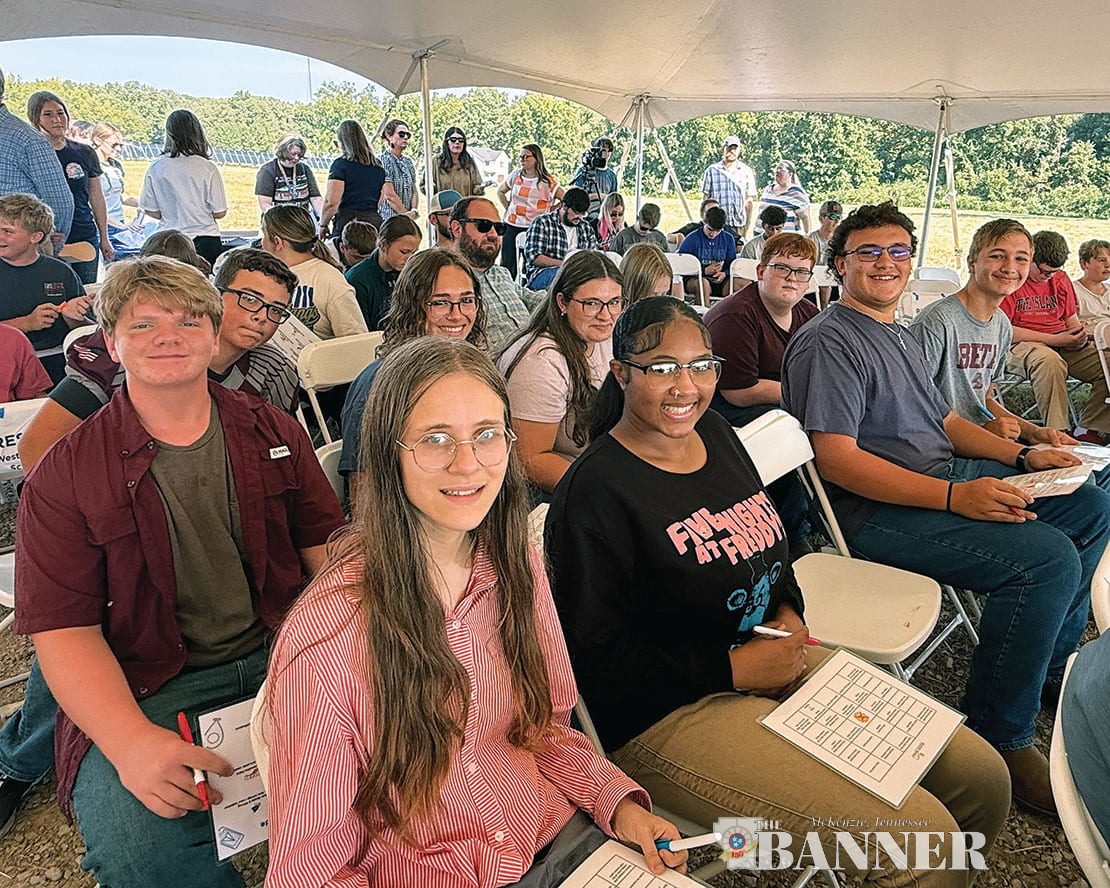
West Carroll Students Attend "Flip the Switch" at Solar Farm
West Carroll students had the opportunity to be part of an exciting moment for our local community this week as they attended the Trezevant Solar Farm “Flip the Switch” event!
Sep 13, 2026

Glow Walk to Bring Awareness, Prevention of Suicide
McKENZIE, Tenn — The Carroll County Health Council, in partnership with Bethel University, will host a Suicide Prevention Glow Walk on Tuesday, Sept. 22, at 7 p.m. to raise awareness and bring community members together in support of suicide prevention.
Sep 13, 2026

Cash Express Honors McKenzie’s First Responders
McKENZIE (September 11) — On Friday, Cash Express honored McKenzie Police (MPD), McKenzie Fire & Rescue (MFD), and Baptist-Carroll County Ambulance first responders with cakes decorated with the American flag and cards signed by McKenzie businesses thanking them for their…
Sep 11, 2026
Trezevant Solar Farm Flip-the-Switch Event Happening Now
Carroll County Electric Department (CCED) and Tennessee-based Silicon Ranch , owner and operator of one of the nation’s largest fleets of solar facilities and a community-focused energy infrastructure company, invite you to attend a “Flip-the-Switch” ceremony for the new…
Sep 10, 2026