Stevens Confident School Sales Tax Bill Will Pass
From the Mar 17, 2026 e-EditionHUNTINGDON (March 13) — State Sen. John Stevens said he is confident legislation aimed at protecting Carroll County school districts’ share of local sales tax revenue will advance during the current legislative session.
Stevens discussed the proposal during Friday morning’s Capitol Talk, outlining the purpose of Tennessee Senate Bill 2188 and a planned amendment that would adjust how enrollment is calculated when dividing the state share of local option sales tax revenue among school systems.
The issue was first raised by school leaders in Carroll County, who warned that recent changes in enrollment could affect how local sales tax funds are distributed. Stevens said he has been working with local legislators, including state representatives Tandy Darby and Brock Martin, along with the Tennessee Department of Education and legislative attorneys, to craft language addressing the problem.
The proposed amendment would require that only students who live within a district or county be counted when calculating enrollment totals used in the formula for distributing the state share of local sales tax. Students enrolled in virtual programs would not be included in that count.
Stevens said the change would bring the distribution method closer to the system previously used.
Concerns about the formula arose following the launch of a statewide virtual program operated by the South Carroll Special School District through the Clarksburg Virtual Academy. Because the program enrolls students from across Tennessee, students are added to South Carroll’s total enrollment even though they do not live in Carroll County.
Local sales tax revenue in Carroll County is divided among districts based on average daily enrollment. As the virtual school’s statewide enrollment increases, the district’s share of the county’s sales tax revenue also rises.
School leaders across the county have warned that the situation could reduce funding for their districts.
The McKenzie Special School District could face an estimated loss of about $126,000. Director of Schools Dr. Justin Barden said the increase in South Carroll’s virtual enrollment could shift a larger portion of county sales tax revenue away from local districts.
Similar concerns were raised by Dr. Jonathan Kee, director of the Huntingdon Special School District, who said his district could lose at least $125,000 if no legislative action is taken.
Preston Caldwell, director of the West Carroll Special School District, said earlier this month the district could lose up to $67,000 if the formula remains unchanged.
“The main issue is whether it’s appropriate for Carroll County sales tax dollars to educate students who do not live here, whose parents do not work here, and who do not spend their money here,” Kee said in February.
Stevens said lawmakers considered a proposal that would have required sales tax revenue to be collected from each virtual student’s home county. However, he said such a plan would likely fail because it would affect multiple counties across the state.
“That would kill the bill because, obviously, other counties and other members who would lose their money would kill the bill,” Stevens said, describing the idea as a “poison pill” for the legislation.
Instead, the amendment was written so that the legislation applies only to Carroll County and does not alter funding formulas elsewhere in Tennessee.
The bill has been placed on the Senate Education Committee calendar as lawmakers continue work on the measure during the current legislative session.
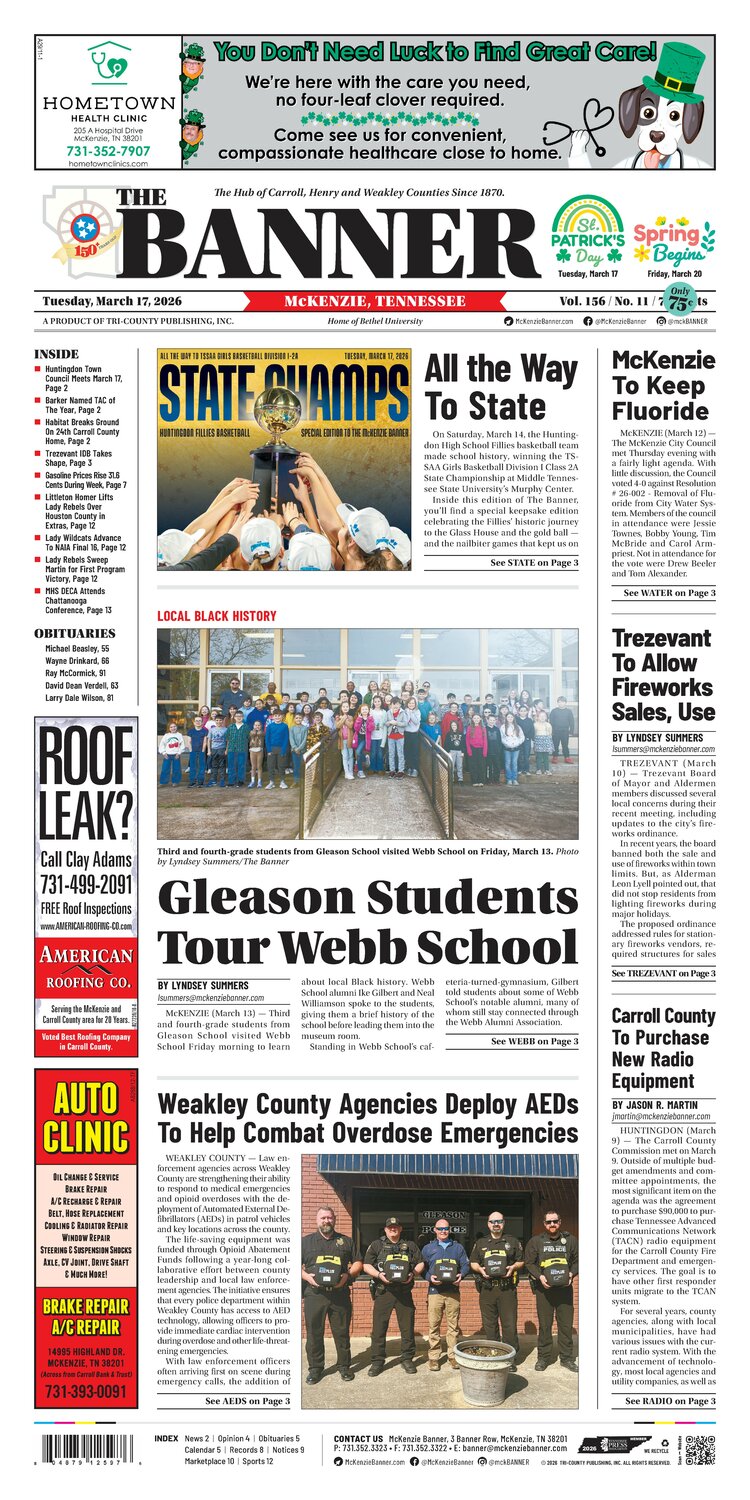
In the e-Edition
McKenzie Banner March 17, 2026 + All the Way to STATE CHAMPS: Fillies Basketball 2026
Mar 17, 2026 · Read the full issue →
Related Stories
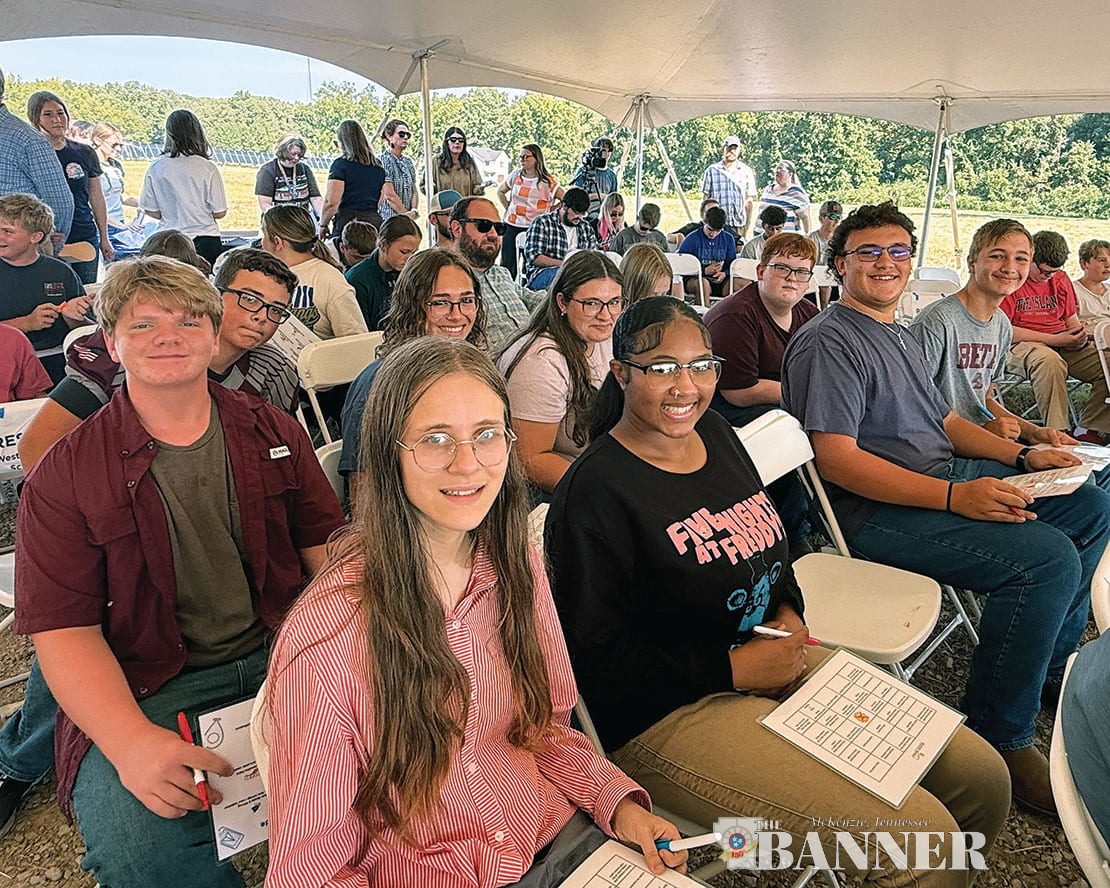
West Carroll Students Attend "Flip the Switch" at Solar Farm
West Carroll students had the opportunity to be part of an exciting moment for our local community this week as they attended the Trezevant Solar Farm “Flip the Switch” event!
Sep 13, 2026

Cash Express Honors McKenzie’s First Responders
McKENZIE (September 11) — On Friday, Cash Express honored McKenzie Police (MPD), McKenzie Fire & Rescue (MFD), and Baptist-Carroll County Ambulance first responders with cakes decorated with the American flag and cards signed by McKenzie businesses thanking them for their…
Sep 11, 2026
Trezevant Solar Farm Flip-the-Switch Event Happening Now
Carroll County Electric Department (CCED) and Tennessee-based Silicon Ranch , owner and operator of one of the nation’s largest fleets of solar facilities and a community-focused energy infrastructure company, invite you to attend a “Flip-the-Switch” ceremony for the new…
Sep 10, 2026
McKenzie Council to Consider Planning Commission Appointments
McKENZIE — The McKenzie City Council will meet Thursday, September 10, at 6 p.m. with a Tennessee Volunteer Firefighter Equipment and Training Grant and two appointments to the McKenzie Planning Commission among the items on the agenda.
Sep 8, 2026